
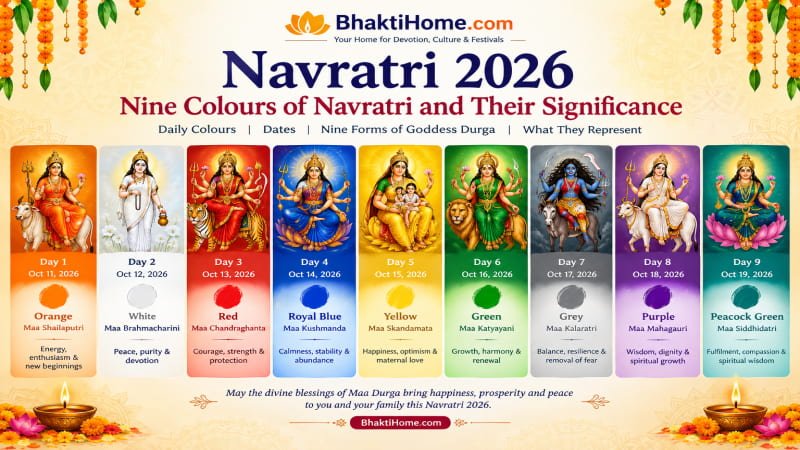
Navratri 2026: Nine Colours of Navratri and Their Significance - Sharad Navratri is one of the most important Hindu festivals, celebrated with devotion, colourful clothing, prayers and traditional festivities dedicated to Goddess Durga. One of the most popular customs during the nine-day celebration is wearing a different colour each day, with every shade traditionally associated with a particular form of the goddess and the qualities she represents.
Navratri 2026: Nine Colours of Navratri and Their Significance
Navratri 2026 begins on Sunday, 11 October, and concludes on Monday, 19 October. Vijayadashami, also known as Dussehra, follows on Tuesday, 20 October. During these nine days, devotees worship the nine manifestations of Goddess Durga, collectively known as Navadurga.
The nine colours of Navratri 2026 are orange, white, red, royal blue, yellow, green, grey, purple and peacock green, following a commonly observed colour sequence based on the weekdays on which the festival falls.
Each colour carries its own symbolic meaning, from the enthusiasm associated with orange to the spiritual fulfilment represented by peacock green. Many devotees choose sarees, kurtas, suits, lehengas or accessories in the designated shade to participate in the tradition.
However, Navratri colour traditions can differ between regions, communities and calendars. The daily colours are a popular festive custom rather than a compulsory religious rule.
Navratri 2026 Colours: Complete List for All Nine Days
If you are looking for the Navratri colour list for 2026, the following table provides a quick guide to the colour for each day, its corresponding date, the form of Goddess Durga worshipped and the traditional significance of the shade.
| Navratri day | Date in 2026 | Colour to wear | Goddess Durga's form | Significance |
|---|---|---|---|---|
| Day 1 | Sunday, 11 October | Orange | Maa Shailaputri | Energy, enthusiasm and new beginnings |
| Day 2 | Monday, 12 October | White | Maa Brahmacharini | Peace, purity and devotion |
| Day 3 | Tuesday, 13 October | Red | Maa Chandraghanta | Courage, strength and protection |
| Day 4 | Wednesday, 14 October | Royal blue | Maa Kushmanda | Calmness, stability and abundance |
| Day 5 | Thursday, 15 October | Yellow | Maa Skandamata | Happiness, optimism and maternal love |
| Day 6 | Friday, 16 October | Green | Maa Katyayani | Growth, harmony and renewal |
| Day 7 | Saturday, 17 October | Grey | Maa Kalaratri | Balance, resilience and the removal of fear |
| Day 8 | Sunday, 18 October | Purple | Maa Mahagauri | Wisdom, dignity and spiritual growth |
| Day 9 | Monday, 19 October | Peacock green | Maa Siddhidatri | Fulfilment, compassion and spiritual wisdom |
Note: This is a commonly followed Navratri colour sequence for 2026. The colours may vary according to regional customs and individual family traditions.
Day 1 – 11 October 2026: Orange for Maa Shailaputri
The first day of Sharad Navratri is dedicated to Maa Shailaputri, the first manifestation of Goddess Durga. Her name is associated with the mountains, and she is traditionally depicted riding a bull while holding a trident and a lotus.
Orange is the colour associated with the opening day of Navratri in the 2026 sequence. It represents enthusiasm, warmth, energy and optimism, making it a fitting choice for the beginning of the festival.
Maa Shailaputri symbolises strength, determination and a firm foundation for spiritual progress. Devotees seek her blessings for stability, courage and a positive start to new endeavours.
Many households begin their Navratri prayers on this day, with rituals that may include setting up a sacred kalash, offering flowers and performing puja.
What to wear on Day 1: Orange sarees, kurtas, salwar suits, lehengas or dresses are popular choices. If you prefer a subtle look, you can incorporate orange through a dupatta, scarf, bindi or jewellery.
Day 2 – 12 October 2026: White for Maa Brahmacharini
The second day of Navratri honours Maa Brahmacharini, the goddess associated with devotion, discipline, perseverance and spiritual knowledge.
White is traditionally connected with peace, purity and simplicity. It reflects the calm and focused nature of Maa Brahmacharini, whose form represents dedication to spiritual practice and self-control.
She is commonly depicted carrying a rosary and a water pot, symbols associated with prayer, endurance and a life devoted to spiritual growth.
For devotees, this day offers an opportunity to reflect on patience, inner strength and the importance of remaining committed to their goals. White clothing is often chosen to express serenity and simplicity.
What to wear on Day 2: White cotton suits, sarees, kurtas and elegant white dresses are suitable options. You can add silver accessories or delicate embroidery to create a traditional festive outfit.
Day 3 – 13 October 2026: Red for Maa Chandraghanta
The third day is dedicated to Maa Chandraghanta, a powerful manifestation of Goddess Durga recognised by the crescent moon shaped like a bell on her forehead.
She is associated with courage, protection and the strength to confront negative forces. Her warrior form represents readiness to defend righteousness while continuing to protect her devotees.
Red is the colour for this day in the 2026 Navratri sequence. Across many Indian traditions, red symbolises power, passion, auspiciousness and celebration. It is also widely associated with festive occasions, making it a natural choice for Navratri clothing.
Worshipping Maa Chandraghanta is traditionally associated with seeking courage, confidence and protection from fear.
What to wear on Day 3: Red sarees, embroidered suits, festive kurtas and red lehengas are popular options. Those who prefer a less vibrant outfit can add a red dupatta, handbag or other accessory.
Day 4 – 14 October 2026: Royal Blue for Maa Kushmanda
The fourth day of Navratri is dedicated to Maa Kushmanda, who is believed in Hindu tradition to have brought the universe into existence through her divine smile.
She is commonly depicted with eight arms and is associated with cosmic energy, vitality and creation. Her form represents the life-giving power that sustains the universe.
Royal blue is the designated colour for Day 4 in this year's commonly followed sequence. The shade is associated with depth, tranquillity, confidence and stability. Its rich appearance also makes it a popular choice for festive and traditional clothing.
The day's worship reminds devotees of the importance of maintaining inner balance while recognising the energy and possibilities of life.
What to wear on Day 4: Royal blue sarees, anarkali suits, kurtas, lehengas and Indo-Western outfits can all work well. Gold or silver detailing can complement the deep blue shade.
Day 5 – 15 October 2026: Yellow for Maa Skandamata
The fifth day celebrates Maa Skandamata, the mother of Lord Skanda, also known as Kartikeya. She is often depicted holding her son, symbolising maternal affection, care and protection.
Yellow is the colour associated with Day 5. It traditionally represents happiness, optimism, knowledge and prosperity. Its bright appearance adds a cheerful atmosphere to the festival.
Maa Skandamata is worshipped by devotees seeking blessings for family well-being, love and spiritual progress. Her maternal form also highlights the importance of compassion, patience and nurturing relationships.
Yellow is especially popular during Indian festivals because it creates a bright and celebratory look without losing its traditional character.
What to wear on Day 5: Yellow sarees, salwar kameez, kurtas, floral dresses and embroidered suits are excellent choices. Marigold-inspired accessories and gold-toned jewellery can enhance the festive appearance.
Day 6 – 16 October 2026: Green for Maa Katyayani
The sixth day of Navratri honours Maa Katyayani, a fierce and powerful form of Goddess Durga. According to Hindu tradition, she fought the demon Mahishasura and represents the triumph of good over evil.
She is frequently portrayed riding a lion and carrying weapons, reflecting her bravery, determination and protective strength.
Green is the designated colour for this day in 2026. It is commonly associated with nature, renewal, harmony and growth. The shade offers a reminder that personal development and strength can exist alongside peace and balance.
Devotees worship Maa Katyayani to seek courage, protection and blessings for their personal and family lives. In some traditions, unmarried women also worship her while praying for a suitable life partner.
What to wear on Day 6: Green sarees, suits, kurtas, lehengas and outfits featuring floral designs are popular choices. You can also choose emerald-green jewellery or a green dupatta to follow the tradition.
Day 7 – 17 October 2026: Grey for Maa Kalaratri
The seventh day is dedicated to Maa Kalaratri, one of the most formidable forms of Goddess Durga. Although her appearance is fierce, she is worshipped as a protective force who destroys evil, ignorance and fear.
Maa Kalaratri represents the power to confront darkness and overcome obstacles. Her form reminds devotees that courage is sometimes required to face difficult circumstances and emerge stronger.
Grey is the colour for Day 7 in the 2026 sequence. It symbolises balance, composure and resilience. Unlike the brighter shades worn on several other days, grey offers a more understated appearance while retaining its place in the festival's colourful tradition.
The contrast between the goddess's fearsome form and her protective nature is an important aspect of her symbolism.
What to wear on Day 7: Grey sarees, kurtas, salwar suits and dresses are suitable choices. You can combine grey with silver jewellery, a colourful dupatta or embroidered details for a more festive outfit.
Day 8 – 18 October 2026: Purple for Maa Mahagauri
The eighth day of Navratri, known as Maha Ashtami, honours Maa Mahagauri, a serene manifestation of Goddess Durga associated with purity, peace and compassion.
She is traditionally depicted wearing white and riding a bull. Her form symbolises tranquillity, spiritual cleansing and the removal of suffering.
Purple is the colour associated with Day 8 in the commonly followed 2026 sequence. It is often linked with wisdom, dignity, creativity and spiritual depth. Its rich appearance makes it a distinctive choice for one of the festival's important days.
Many families observe special prayers on Ashtami. In several communities, Kanya Pujan is performed by honouring young girls as manifestations of the divine feminine, although the timing and customs differ between households.
What to wear on Day 8: Purple sarees, anarkali suits, lehengas and traditional dresses are popular options. Lavender offers a softer alternative, while deeper purple shades can create a more dramatic festive look.
Day 9 – 19 October 2026: Peacock Green for Maa Siddhidatri
The ninth and final day of Navratri is dedicated to Maa Siddhidatri, the goddess associated with spiritual wisdom, fulfilment and the granting of divine accomplishments.
She is commonly depicted seated on a lotus and is worshipped as the manifestation who represents the completion of the Navadurga journey. Devotees seek her blessings for knowledge, spiritual advancement and a deeper understanding of life.
Peacock green is the designated colour for Day 9 in the 2026 sequence. This rich blue-green shade is associated in modern festive colour traditions with elegance, harmony and individuality. It provides a graceful conclusion to the nine-day celebration.
The final day is an opportunity for devotees to express gratitude, complete their prayers and reflect on the spiritual significance of Navratri.
What to wear on Day 9: Peacock-green sarees, silk suits, embroidered kurtas and festive lehengas are suitable choices. Teal or blue-green accessories can also help you incorporate the day's colour without purchasing a complete new outfit.
Why Are Different Colours Worn During Navratri?
Wearing a different colour on each day of Navratri has become a popular way to participate in the festival and celebrate its nine manifestations of Goddess Durga.
Each day's colour is traditionally connected with symbolic qualities such as courage, purity, prosperity, devotion and wisdom. Wearing the designated shade allows devotees to express these associations through clothing while creating a shared festive experience with family, friends and their wider community.
The tradition is also popular on social media, where people share their daily outfits, festival photographs and colour-themed celebrations.
It is important to understand, however, that the nine-colour tradition is not a universal religious requirement. The meanings attributed to colours can vary, and some communities follow different sequences or place greater emphasis on their own regional customs.
For many people, the colours are a joyful way to express devotion and take part in the celebrations.
Can You Wear Other Colours During Navratri 2026?
Yes. You can wear colours other than the traditionally assigned shade during Navratri.
Following the daily colour sequence is a festive custom, not a compulsory condition for worshipping Goddess Durga. Devotion, prayer and participation in the festival are more important than matching a particular colour.
If you want to follow the tradition without changing your entire outfit every day, there are several simple options:
- Wear a dupatta or scarf: Add a piece of clothing in the designated colour to an outfit you already own.
- Choose matching accessories: A handbag, bangle, necklace, hair accessory or pair of earrings can incorporate the day's shade.
- Use subtle colour accents: A bindi, pocket square, embroidered detail or footwear can help you participate without wearing the colour from head to toe.
- Reuse your festive wardrobe: You can mix and match existing clothes instead of purchasing new outfits for all nine days.
- Follow your family's traditions: If your household observes a different colour sequence, you can continue to follow the custom familiar to your community.
There is no need to feel pressured to buy new clothes or follow a colour scheme that does not suit your preferences.
What Is the Significance of the Nine Forms of Goddess Durga?
The nine days of Navratri are associated with the worship of the Navadurga, the nine manifestations of Goddess Durga. Each form represents different aspects of divine feminine power and spiritual life.
The traditional sequence is:
- Maa Shailaputri: Strength, stability and the beginning of spiritual progress.
- Maa Brahmacharini: Devotion, discipline and perseverance.
- Maa Chandraghanta: Courage, protection and bravery.
- Maa Kushmanda: Creation, vitality and cosmic energy.
- Maa Skandamata: Maternal love, care and compassion.
- Maa Katyayani: Strength, justice and the destruction of evil.
- Maa Kalaratri: Protection from darkness, fear and negative forces.
- Maa Mahagauri: Purity, peace and spiritual cleansing.
- Maa Siddhidatri: Wisdom, fulfilment and spiritual accomplishment.
Together, these manifestations represent different qualities that devotees seek to cultivate through prayer and reflection during Navratri.
When Is Navratri 2026 and When Is Dussehra?
Sharad Navratri 2026 begins on Sunday, 11 October, and concludes on Monday, 19 October. Vijayadashami, commonly known as Dussehra, falls on Tuesday, 20 October.
Navratri is observed over nine nights, with devotees worshipping the different forms of Goddess Durga. The festival may include daily puja, fasting, devotional music, community gatherings, traditional dancing and special offerings, depending on regional and family customs.
Dussehra marks the culmination of the festival and is widely associated with the victory of good over evil. Its observances vary across India, reflecting different regional traditions and religious narratives.
People planning their celebrations should check a locally followed Hindu calendar for the precise timings of puja and other rituals, as these can depend on the location and the relevant tithi.
Frequently Asked Questions About Navratri 2026 Colours
1. What is the colour of Navratri on 11 October 2026?
The commonly followed colour for the first day of Navratri on Sunday, 11 October 2026, is orange. The day is dedicated to Maa Shailaputri, and orange symbolises energy, enthusiasm and new beginnings.
2. What are the nine colours of Navratri 2026?
The commonly followed nine colours are orange, white, red, royal blue, yellow, green, grey, purple and peacock green. The sequence runs from 11 October to 19 October 2026, with one colour associated with each day.
3. Which colour should I wear on the first day of Navratri 2026?
Orange is the designated colour for Day 1 in the commonly followed 2026 sequence. You can wear an orange saree, kurta, suit or dress, or simply incorporate the colour through an accessory.
4. Which colour should I wear on Maha Ashtami 2026?
Purple is the colour associated with Maha Ashtami, which falls on Sunday, 18 October 2026, in this sequence. The day is dedicated to Maa Mahagauri and is observed with special prayers in many households.
5. What is the colour for the last day of Navratri 2026?
Peacock green is the designated colour for the ninth day, Monday, 19 October 2026. The day honours Maa Siddhidatri and marks the conclusion of the nine-day Navratri celebration.
6. Is it compulsory to wear the Navratri colour every day?
No. Wearing a different colour each day is a popular tradition, not a compulsory religious rule. Devotees can wear other colours and participate in Navratri according to their own beliefs, preferences and family customs.
7. Do Navratri colours change every year?
Yes, the commonly followed sequence can change from year to year because the colours are often associated with the weekdays on which the nine days of Navratri begin and continue. Regional practices and individual traditions can also influence the sequence.
8. Why do people wear different colours during Navratri?
People wear different colours to celebrate each day of the festival and symbolically connect with the qualities associated with the form of Goddess Durga worshipped that day. The practice also creates a shared sense of celebration and is popular among families and social groups.
9. When is Dussehra in 2026?
Dussehra, also known as Vijayadashami, falls on Tuesday, 20 October 2026, following the conclusion of Sharad Navratri on 19 October.
Conclusion
Navratri 2026 is an opportunity to celebrate devotion, cultural traditions and the spiritual significance of Goddess Durga's nine manifestations. From orange on the opening day to peacock green on the ninth day, each shade in the commonly followed colour sequence carries its own symbolic associations.
Whether you choose a complete outfit in the designated colour or add a simple accessory, the tradition offers an enjoyable way to participate in the celebrations.
Remember that the colour sequence can differ between communities, and wearing a particular shade is not compulsory. The deeper meaning of Navratri lies in devotion, the pursuit of positive qualities, time spent with loved ones and the celebration of the triumph of good over evil.
Wishing everyone a happy, peaceful and blessed Navratri 2026!
